A Henfijeous file is a short document, not a mood board. The first page holds the baseline: photographs under fixed light, the instrument readings we took that day, and the products you were already using. The second page is the protocol — session dates, what was done, and the home-care list. Interval pages repeat the same frames and numbers at week four and, on longer courses, week eight. The last page is the exit: the same measures, a one-paragraph summary, and a note on home-care adherence. We do not add star ratings. If a number did not move, the file says so.
Results files
Six case files, written the way we write them for clients.
Each file uses the same headings we print at the end of a program: baseline, protocol, interval checks and exit measures. The people in these files are not real named clients.
These are illustrative composite case files. They show the format and the measurement types we use. They are not records of named clients, and nothing here is a promise of the same outcome.
How to read a file
The files
CF-01
Congestion & texture · 12 weeks
42 → 11
Inflammatory lesion count
6 → 2
Texture score /10
Protocol mixed six in-clinic sessions with a four-step home routine: cleanse, barrier cream, a measured retinoid night, and daily sunscreen. We held actives for the first ten days while TEWL settled, then stepped strength at week four when lesion count had already dropped. Extraction days were limited to two so the barrier was not the thing we were repairing at the end.
Spend: $1,890
Illustrative case file — a composite example showing how we record and report a program. Not a record of a named client.
CF-02
Post-summer pigmentation · 8 weeks
−31%
Melanin index
+2.4
Even-tone score
Four pigment sessions on marked patches only, with a strict no-sun window after each pass. Home care was ascorbic acid in the morning, a tyrosinase inhibitor at night, and a hat we actually checked for in the notes. The even-tone score is a side-by-side grade, not a filter. We stopped at eight weeks because the index had flattened and further passes would have been vanity, not work.
Spend: $1,440
Illustrative case file — a composite example showing how we record and report a program. Not a record of a named client.
CF-03
Barrier repair after over-exfoliation · 6 weeks
−38%
TEWL
7 → 3
Redness score
Zero actives for twenty-one days. Three quiet clinic visits for occlusive work and two phone check-ins. The person in this composite had stacked acids, a home device and a new retinoid in the same month. We measured TEWL after the settle period, not on the angry first visit, so the baseline was usable. Redness was graded on the same cheek map. When sting on wash-off dropped to zero, we wrote a cautious re-entry plan and closed the file. No peel, no needling, no “glow” language.
Spend: $980
Illustrative case file — a composite example showing how we record and report a program. Not a record of a named client.
CF-04
Body composition · 16 weeks
−4.8 kg
Fat mass
+1.2 kg
Lean mass
−7 cm
Waist
Eight coaching reviews, fortnightly bioimpedance and tape, no injectable work. The plan was food timing, walking minutes and two strength sessions the person already had access to. We logged adherence in the same grid as the scale. Waist was the mean of three tapes at the same landmark. The file ends with the raw table, not a before-and-after pose.
Spend: $1,260
Illustrative case file — a composite example showing how we record and report a program. Not a record of a named client.
CF-05
Seasonal shedding support · 14 weeks
120 → 55
Daily shed count
Wk 9
Scalp sebum normalised
Shed count was a timed comb-through at home, written on a card we collected each review. In-clinic work was scalp treatment and a mild peel series, not a hair-loss drug. When sebum score sat in the normal band at week nine we held the tonic and watched. We sent the person to a GP at week two because a sudden shed can be iron, thyroid or a drug — the file notes that referral and the later all-clear.
Spend: $1,320
Illustrative case file — a composite example showing how we record and report a program. Not a record of a named client.
CF-06
Six-week event prep
+22%
Hydration index
−35%
Pore visibility score
Five sessions: two hydration infusions, one measured peel, LED on two visits, and a final tidy facial. We refused needling inside the last fortnight because swelling would have fought the photographs. Pore visibility is a cropped, same-distance grade, not a beauty filter. The file is honest that six weeks cannot rewrite pigment or a barrier in crisis; it can raise water in the stratum corneum and calm shine for a date that will not move.
Spend: $1,150
Illustrative case file — a composite example showing how we record and report a program. Not a record of a named client.
Where numbers come from
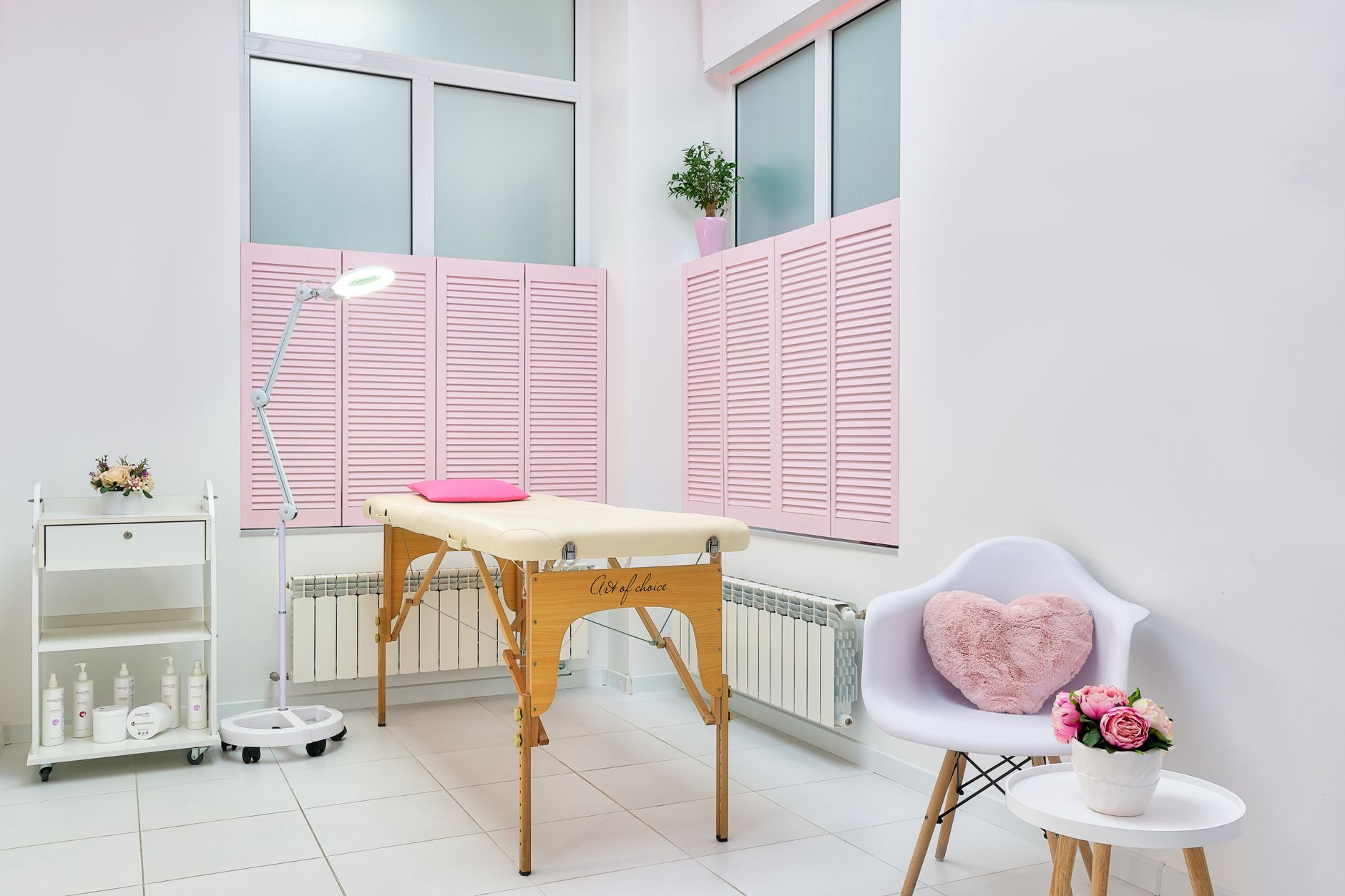
Fixed photography
A stand, a marked floor, the same colour temperature every visit. Cross-polarised frames cut surface shine so we can count lesions and read tone. We do not accept phone photos as a baseline, because the next phone will not match. If the stand is moved, the visit is a treatment day, not a measure day.
Corneometry and TEWL
Hydration and barrier loss are instrument readings after twenty minutes in the room. We note recent exercise, a hot walk up Chapel Street, or a face just washed — any of those can fake a number. The probe does not diagnose disease; it tells us whether the barrier is stable enough for the next active.

Scale and tape
Bioimpedance for fat and lean mass, a tape at agreed landmarks, always in the morning slot when we can. Clothing, a full meal or a late night will move the scale. We write the conditions in the file so a later reading is not compared in bad faith, and we treat a single day as a trend point, not a verdict.
What we will not claim
Results are individual. Hormones, prescription medicines, sleep, sun and the simple fact of showing up all sit outside our chair. We do not treat disease. Acne that looks cystic, pigment that looks like a changing mole, sudden hair loss, unexplained weight change — those go to a doctor, and we will write the referral note rather than sell a course. A composite file is a teaching object. It is not a guarantee, a testimonial or a named person.
Get your own baseline — $95
Forty-five minutes, photographs, hydration and TEWL, a written plan. The fee is credited to a program booked within 30 days.
Book a mapping session